
Transactional work is in. Disputes generally are not.
For conveyancers and property lawyers, the dividing line under Tranche 2 is fairly clear: acting on the transfer of real estate is a designated service, and running a dispute about a property generally is not.
A conveyancing practice is therefore likely captured across most of what it does. A general law firm may find that its property and commercial teams are captured while its litigation practice is not — which creates a practical problem, because the obligations attach to the practice, not to the team.
The services that capture a legal practice
- Assisting with the transfer or sale of real estate.
- Assisting a client to plan or execute the buying or selling of a body corporate or business.
- Forming or restructuring companies, trusts and other legal arrangements.
- Acting as, or arranging, a director, trustee or nominee shareholder.
- Receiving, holding or disbursing client funds in connection with a transaction, including through a trust account.
The trust account point catches practices out. Money moving through a legal practice trust account in connection with a captured transaction sits at the centre of what the regime is designed to see.
Privilege does not disappear, but it does not exempt you
The regime does not override legal professional privilege, and there are provisions dealing with how privileged material is handled. But privilege is not a reason to skip enrolment, customer due diligence, or having a program — those obligations apply to the practice regardless.
The sensible approach is to build the program first and then work through, with advice, how privileged communications are handled within it. Practices that invert that order tend to stall entirely.
The client experience problem
Conveyancing runs to tight settlement timetables, and identity verification is now a step in the middle of that. Practices that treat it as a manual, email-based chore find it adds days and irritates clients at exactly the wrong moment.
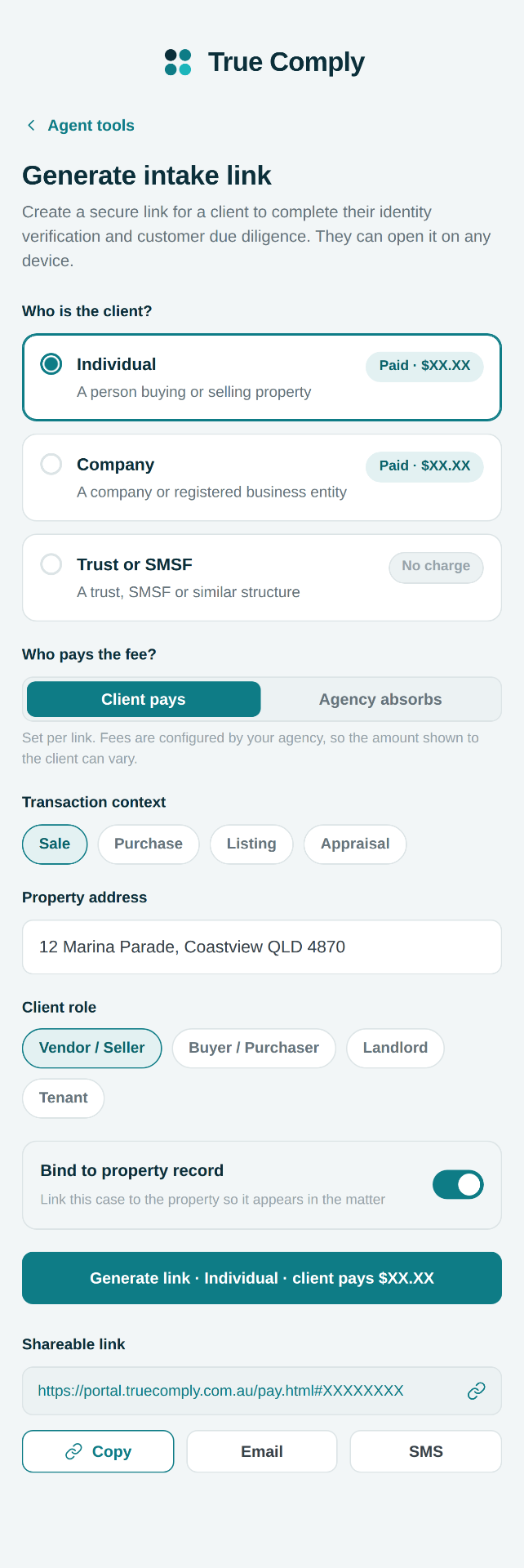
Done properly, verification happens on the client's phone in minutes and the record lands in the file automatically. That is a service-quality question as much as a compliance one.
Where to start
Map your service lines, enrol if you have not, and stand up a program that covers the captured work without dragging your whole practice into it. True Comply gives conveyancers and property lawyers the program, the screening and the audit-ready record on every matter — with client verification that does not slow settlement down. Start the conversation.
For the detail — captured services, key dates and obligations in order — see our AML/CTF guide for conveyancers and property lawyers.
Related insights
- How to run customer due diligence that stands up
How to · 6 min read
- ‘Are we even captured?’ How AML/CTF scope really works
Scope · 4 min read
- Tranche 2 is here: what it means for Australian real estate agencies
Real estate · 5 min read
Sector guide: AML/CTF compliance for conveyancers and property lawyers