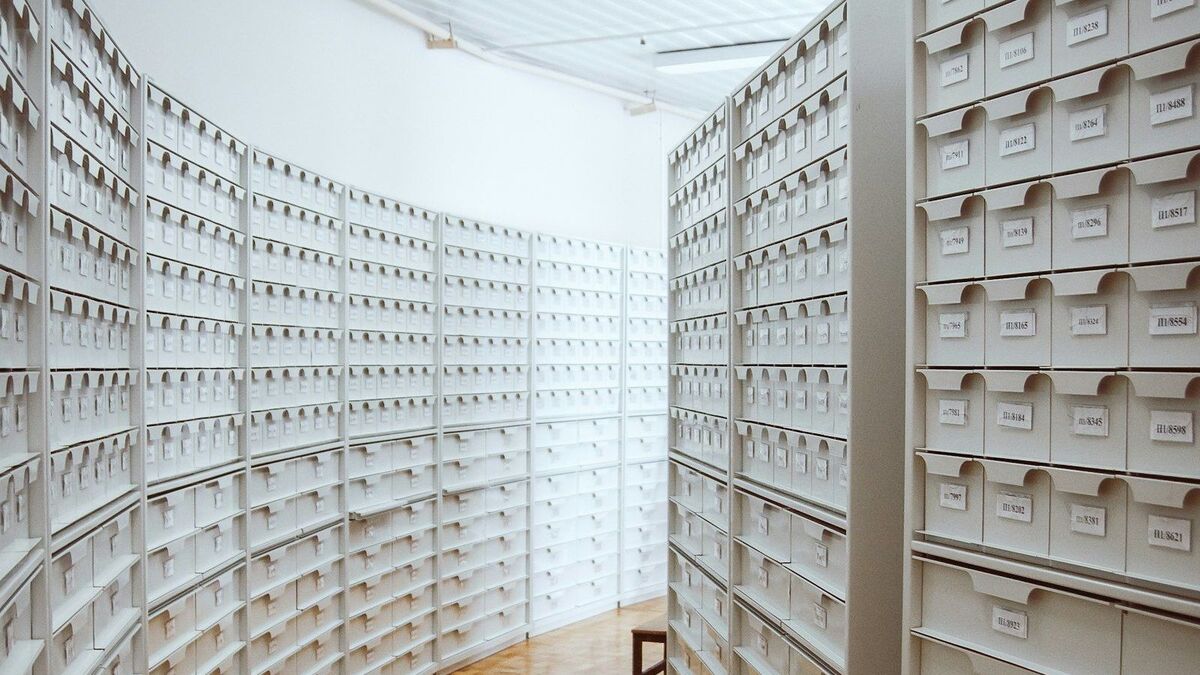
A policy is a promise, not proof
Plenty of businesses respond to new regulation by writing a policy, printing it, and filing it. That's a start — but a policy describes what you intend to do. It isn't evidence that you did it. Under the AML/CTF regime, you are expected to be able to show your work: the checks you ran, the decisions you made, and why.
The gap between “we have a policy” and “here is the record” is where compliance efforts tend to fall down.
What “show me” really asks for
When someone asks you to demonstrate compliance, they're asking for the trail: the customer due diligence you performed, the screening results, the risk decisions and who approved them, and the records that tie it all together. Reconstructing that after the fact is slow, stressful and error-prone — and record-keeping obligations expect most of it to be retained for seven years.
Capture evidence as you work
The businesses that handle this well don't treat evidence as a separate task. They capture it as a by-product of doing the work: every client onboarded, every screen run, every decision logged in one place, in real time. When the request comes, the answer is already there.
Where technology earns its place
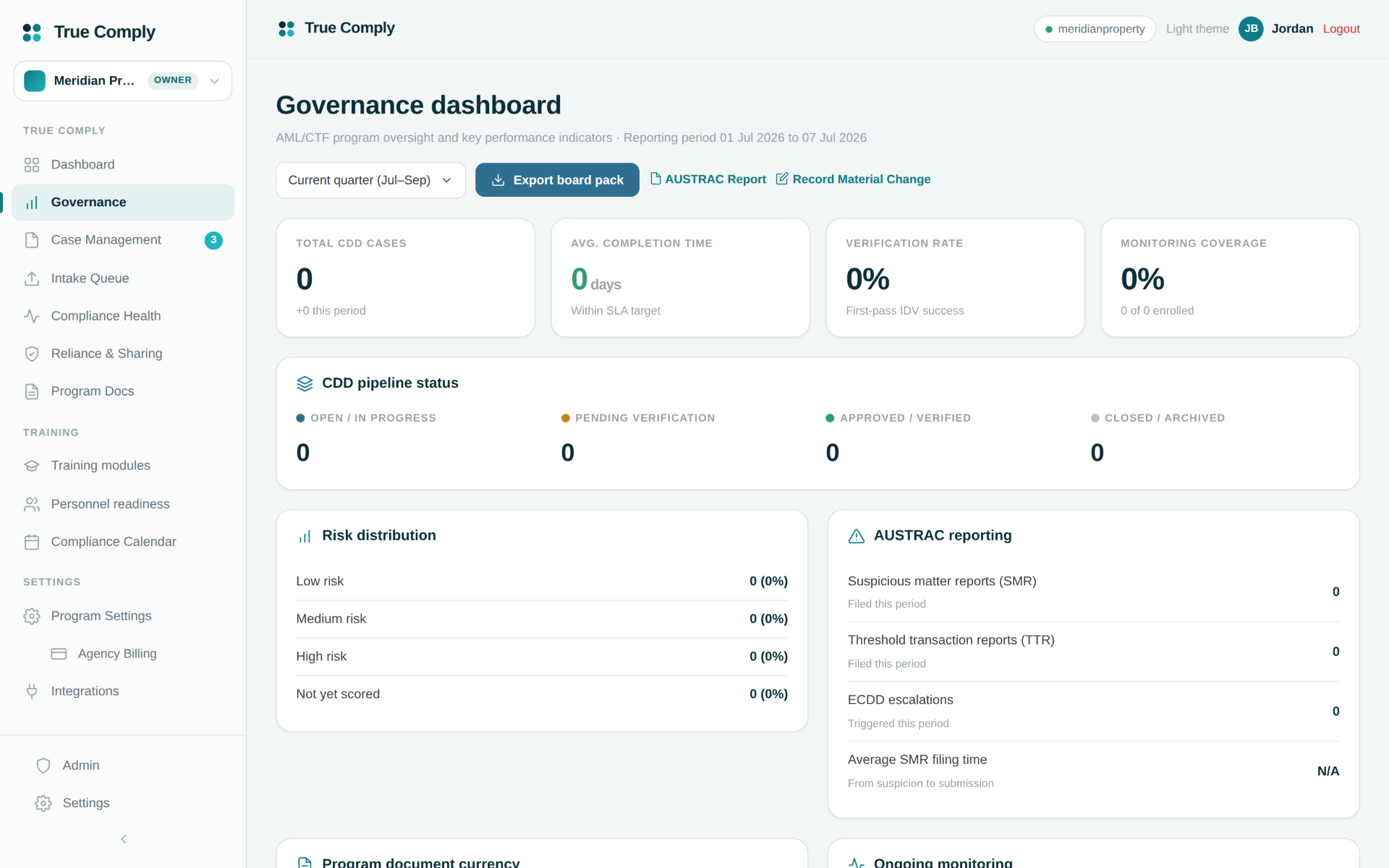
This is exactly where the right platform pays off. Screening, customer due diligence, monitoring and reporting done in one connected system means the record builds itself, and board-ready reporting is a click away rather than a fire drill. That's what we mean by “compliance you can prove”. If you'd like to see it, start the conversation.
Read next
Find your sector →Related insights
- Your first independent evaluation: what AUSTRAC actually expects
Assurance · 6 min read
- What to look for in an AML/CTF platform
Choosing a solution · 6 min read
- Spreadsheets, consultants or software: three ways firms are handling Tranche 2
Choosing a solution · 5 min read